
“Who is it that would loan Allah a goodly loan so He may multiply it for him many times over?”
— Surah Al-Baqarah, 2:245
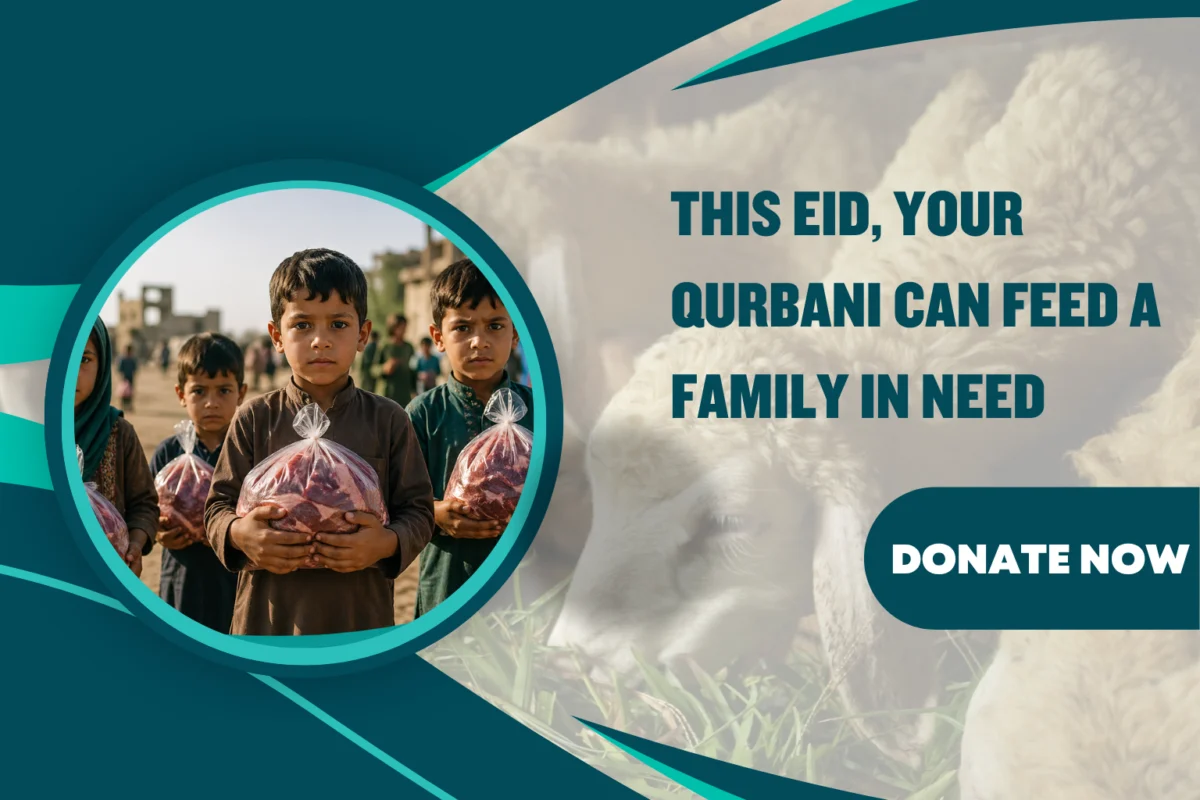
This Eid, as you prepare your Qurbani 2026, millions of families in Gaza and the Rohingya camps of Cox’s Bazar are waiting not for celebration, but for their next meal. For them, Qurbani meat is not a tradition; it is a lifeline. The question is not whether you can give. The question is whether your sacrifice will reach those who need it most. In a season when famine conditions persist in Gaza and malnutrition stalks the world’s largest refugee settlement in Bangladesh, your Qurbani is more than an act of worship it is an act of survival for someone else.
What Is Qurbani and Why Does It Matter in 2026?
Qurbani (also spelled Qurban) is the Islamic act of sacrificing a livestock animal during the days of Eid al-Adha the 10th, 11th, and 12th of Dhul Hijjah in commemoration of Prophet Ibrahim’s (AS) willingness to sacrifice his son for the sake of Allah. It is an obligation for every Muslim who meets the nisab threshold.
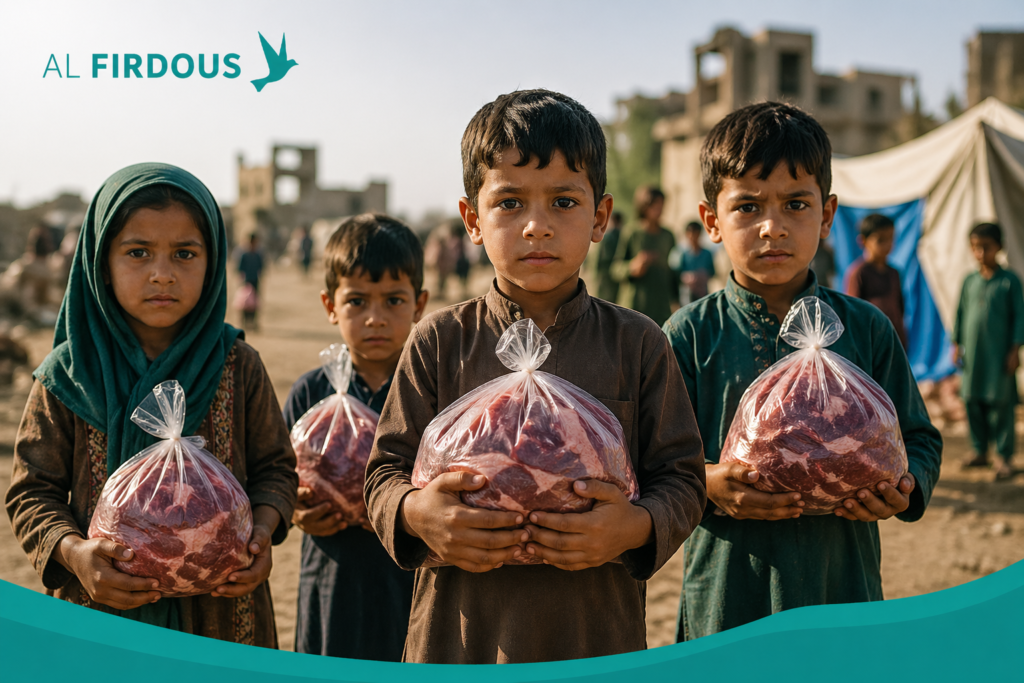
The meat is divided into three equal portions: one for the family, one for relatives and friends, and one for those in need. When you donate your Qurbani through a trusted charity, that final third reaches some of the most vulnerable people on earth.
“It is the Sunnah of your father Ibrahim. For every hair of the Qurbani, you receive a reward from Allah.”
— Sunan Ibn Majah, 3127
In 2026, the urgency has not lessened. Famine risks persist across Gaza after sustained conflict, while over one million Rohingya refugees in Bangladesh face extreme food insecurity. Fresh meat the centrepiece of a Qurbani distribution — can be a rare and nourishing gift for families surviving on rations.
The Crisis Facing Rohingya Families This Eid al-Adha
The Rohingya refugee camps in Cox’s Bazar, Bangladesh, are home to over one million people who fled violence in Myanmar. This Eid, families there face acute shortages that make Qurbani donations one of the most impactful forms of giving:
- Nutritional deprivation: Meat is rarely available in camps where daily rations cover only basic carbohydrates. A Qurbani share can provide a family with protein they have not tasted for months.
- Health crises: Scabies outbreaks and waterborne illnesses are widespread, making hygiene kits and WASH services (water, sanitation, and hygiene) an urgent parallel need alongside food distribution.
- Children’s welfare: Thousands of children in the camps face stunted growth due to malnutrition. Nutritional support programmes targeting children under five are critically underfunded in 2026.
- Education gaps: With limited access to formal schooling, many children in the camps are missing years of learning. Eid is also an opportunity to donate to gift programmes that bring moments of joy and dignity to young lives.
Organisations active in Cox’s Bazar are offering full photo and video reporting on Qurbani distributions a key marker of transparency you should look for when choosing where to give.
Why Gaza Qurbani 2026 Is a Humanitarian Emergency
The situation in Gaza remains one of the most severe humanitarian crises in the world. As Eid al-Adha 2026 approaches, aid workers on the ground are reporting:
- Acute food insecurity: Large portions of the population remain at risk of famine, with supply chains severely disrupted. Qurbani meat distributions represent one of the few ways to deliver fresh protein to families directly.
- Water and medical shortages: Access to clean water is severely restricted in many areas. Emergency water trucking and medical supply runs are among the highest-priority needs cited by relief organisations active in Gaza.
- Rehabilitation of food systems: Longer-term recovery requires repairing water wells, rehabilitating farmland, and restoring local food production capacity — giving your Sadaqah Jariyah (ongoing charity) dimension as well as immediate impact.
- Shelter and dignity: Families who have lost everything need not only food but the sense of dignity that comes with a proper Eid meal shared with their children.
If you want your Qurbani to reach Gaza this Eid, choose a charity with a proven logistics network operating in the region and a clear reporting process. Al Firdous runs verified Qurbani projects with full accountability and with their 100% donation policy, every penny you give goes directly to distribution.
Key Ways to Give This Eid al-Adha Beyond Qurbani
Qurbani is a powerful act of giving, but the needs of Rohingya and Gaza families extend across the full spectrum of humanitarian response. Here is how to give comprehensively this Eid:
- Qurbani donation: The most timely form of Eid giving provide fresh meat to families who have none. Choose from single-share or full animal options depending on your budget.
- Emergency food parcels: One food parcel can sustain a family for weeks. Particularly vital in areas where regular supply lines have been disrupted.
- Hygiene kits: Soap, toothbrushes, sanitary products, and basic medicines. In camps where scabies and infection spread rapidly, these kits save lives.
- Zakat al-Fitr and Fidya: If you still have outstanding Zakat al-Fitr from Ramadan, or Fidya payments to make, Eid al-Adha is an excellent time to settle these obligations and direct them to Gaza or Rohingya appeals.
- Sadaqah Jariyah projects: Water wells, medical clinics, and educational facilities provide ongoing benefit long after Eid has passed earning you continuous reward.
How Al Firdous Can Help You Give With Confidence
Al Firdous Organisation is a Leicester-based UK registered charity (No. 1207010) operating a strict 100% donation policy — meaning every pound you give goes directly to those who need it, with no administrative costs deducted from your contribution.
This Eid al-Adha, Al Firdous is running verified Qurbani projects for Rohingya families in Bangladesh and emergency relief for Gaza, including food distributions, hygiene kits, and water access programmes. Our teams on the ground provide transparent reporting so you can see exactly where your sacrifice lands.
You do not have to wonder whether your Qurbani reached a family in need. With Al Firdous, you will know.
Give Your Qurbani at alfirdous.org.uk →
FAQs About Qurbani 2026
What is the deadline for donating Qurbani in 2026?
Qurbani must be performed on the 10th, 11th, or 12th of Dhul Hijjah. For 2026, this falls in early June. To ensure your Qurbani is carried out in time, it is best to donate at least one week before Eid al-Adha begins, as charities need time to arrange logistics and procurement.
How much does a Qurbani donation cost in the UK?
The cost varies depending on the country of distribution and the type of animal. A single sheep or goat share for Rohingya or Gaza families typically starts from around £30–£50. Full cows or bulls (shared across seven people) are available at higher price points. Al Firdous offers several options to suit different budgets.
Is Qurbani compulsory (wajib) or optional?
The majority of scholars consider Qurbani wajib (obligatory) for every adult Muslim who possesses wealth above the nisab threshold on the days of Eid al-Adha. If you are unsure whether it applies to you, consult a local scholar or imam. When in doubt, giving is always the safer choice.
Can I give Qurbani on behalf of a deceased family member?
Yes. It is permissible and widely practised to perform Qurbani on behalf of a deceased parent, spouse, or relative as an act of Sadaqah Jariyah for their soul. The reward is shared between the living donor and the deceased. You do not need to perform a separate Qurbani for yourself — one can cover both intentions.
How do I know my Qurbani donation will actually reach Gaza or Rohingya families?
Choose a charity that provides photographic and video evidence of distribution, alongside clear project reports. Al Firdous operates with a 100% donation policy and on-the-ground partner networks with a track record of verified delivery. Always look for a registered charity number — Al Firdous is registered as UK Charity No. 1207010.
This Eid al-Adha, your Qurbani can do more than fulfil an obligation — it can change a life. A family in a Gaza tent or a Rohingya camp will sit down to a meal they could not have imagined without your sacrifice. Al Firdous ensures that 100% of your donation reaches those who need it most, from Leicester to Cox’s Bazar, from our community to theirs.
Donate today at alfirdous.org.uk and let your good deed never end.